Micro:Bit Distance Detection With Ultrasonic Sensor and OLED

OLED Display
What it is: A small screen that displays text, graphics, or simple animations.
OLED = Organic Light-Emitting Diode.
Pins:
VCC/VDD - Power (3.3V or 5V)
GND - Ground
SCL - Clock signal (for I2C communication)
SDA - Data signal (for I2C communication)
Use case: Display sensor readings, status messages, menus, or simple graphics.

I2C (Inter-Integrated Circuit)
What it is: A communication protocol that allows multiple devices to talk to a microcontroller using only 2 wires.
How it works:
SCL (Serial Clock) - Timing/synchronization wire
SDA (Serial Data) - Data transfer wire
Multiple devices share the same 2 wires
Each device has a unique address (like 0x68 for MPU6050, 0x3C for OLED)
Advantage: You can connect many devices (OLED, sensors, etc.) using just 2 pins instead of needing separate pins for each device.
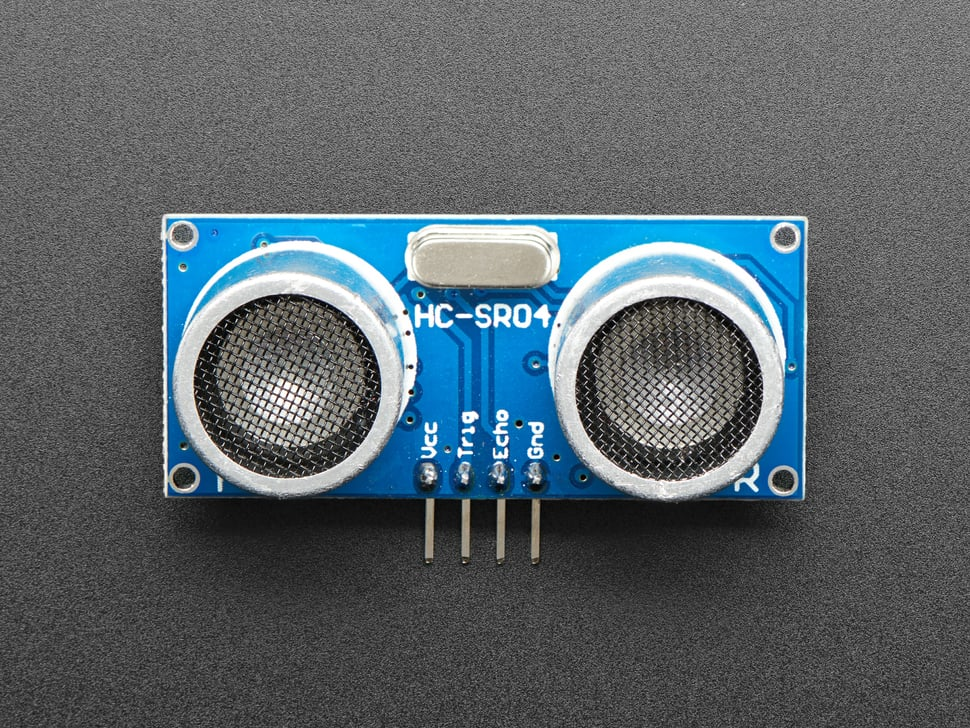

Ultrasonic Sensor (HC-SR04)
What it is: A distance sensor that uses sound waves (like sonar or bat echolocation) to measure how far away objects are.
Pins (typically 4):
VCC - Power (5V)
GND - Ground
TRIG (Trigger) - Send signal to start measurement
ECHO - Receives signal when sound bounces back
How it works:
Sends out ultrasonic sound pulse
Sound bounces off object
Measures time for echo to return
Calculates distance = (time × speed of sound) / 2
Range: Typically 2cm to 400cm

Micro:bit Breakout Board
What it is: An adapter board that makes it easy to connect the BBC micro:bit to other components.
Features:
Edge connector pins broken out - All micro:bit pins available as standard headers
Screw terminals or pin headers - Easy wire connections (no soldering needed)
Voltage regulation - Some boards provide 3.3V and 5V outputs
I2C pins clearly labeled - Easy to find SCL and SDA
Extra GND and power pins - Multiple devices can share power


Comments